
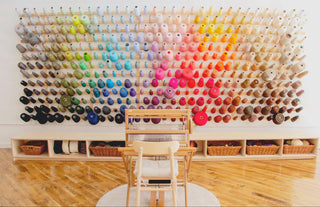
It all started with a loom.
Around 10,000 years ago, with the rise of agriculture, humans began using not only animal hides but also plant fibers and animal hair to make thread and cloth. The art of weaving emerged as a way to create clothing and essential tools for daily life.
In time, people developed primitive wooden looms. Simple cloth made by interweaving warp and weft threads protected the body from nature and served as a means of expression through color and pattern. Then unique cultures began to bloom around the world.
In the late 18th century, the first wave of the Industrial Revolution brought machines that could spin yarn and weave fabric in place of human hands. The mechanical technologies of the loom laid the foundation for mass production—and later, the rise of the automobile industry and other industrial advancements.
Today, we live in a world shaped by machines, symbols, and automation—from birth to death. In our convenience-filled lives, many of us pause and wonder, "What truly matters?" It was in such a moment that I encountered a loom.
As I wove freely, body and mind became one—and I felt the joy of creating awakened from deep within me. The act of weaving is close to our primitive instincts. By using our hands and facing yarns, anyone can awaken a forgotten joy still alive in our cells.
We, Loop of the Loom, don’t simply offer a loom. We offer time to reconnect with yourself—a gateway into your own world. Zen Weaving is not about looking outward, but looking within. As your hands move, a quiet conversation with yourself begins. Our Zen Weaving Dojo is open, so that for each person who arrives, it may become the start of a new journey.
- Yukako Satone

OUR PRACTICE
For over 20 years, we have shared the art of free-form weaving in New York City—and from that, Zen Weaving was born. This philosophy expands beyond the loom, extending into sustainable handcrafts such as dyeing and spinning. It has evolved into a practice that helps us rediscover the essence of joy through working with our hands.
Inspired by Gandhi’s homespun revolution and the Japanese Mingei (folk craft) movement, we value the wisdom and natural materials passed down from our ancestors and aim to carry these connections into daily life. Our goal is to create a space where everyone is welcome to take part in this journey.
In our classes, the focus is not on mastering techniques or striving for perfection. We honor each person’s unique sensibility, encourage time for exploration, and create a space where the joy of discovery can be shared with others.
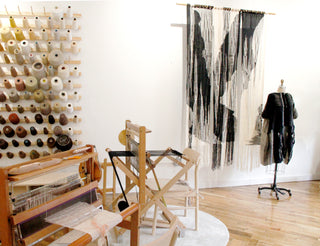
OUR STUDIOS
Our original studio opened in 2005 in a small space in Englewood, New Jersey. The studio quickly filled with students from the tristate area and beyond, who had been eagerly awaiting handweaving classes. In 2008, we relocated to the Upper East Side, becoming the only handweaving studio in Manhattan.
Since then, we have contributed to the growth of the fiber arts community in the New York metropolitan area through numerous initiatives—partnering with local communities, collaborating with designers on sustainable projects, supporting children's education, and creating work opportunities for individuals with disabilities.
In 2019, we opened our second studio in DUMBO, Brooklyn. Here, we host annual exhibitions and workshops featuring traditional Japanese craftsmen and contemporary textile artists, cultivating vibrant connections with the local art and craft scene.
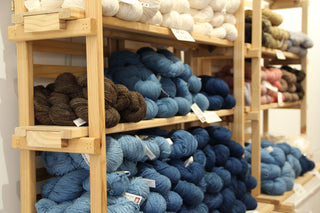
OUR STORES
Every year, our founder Yukako visits remote villages in Japan to learn traditional handcrafts on the verge of extinction. These experiences shape her mission to revive and preserve ancient sustainable methods with natural materials to inspire others.
In-store and online, we sell high-quality Japanese yarn and exotic fibers, natural dyes and fiber arts tools that we carefully curated with sustainability and wellness in mind, suited for the eco-conscious crafter.
OUR FOUNDER
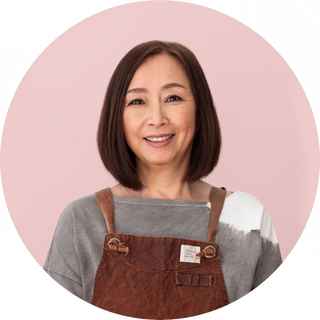
Yukako Satone began organizing community spaces while studying visual design in Japan, first opening an avant-garde music venue. She was introduced to contemporary Japanese weaving after raising her daughter in NYC. Encouraged by a childhood friend who ran a textile arts studio for people with disabilities, Atelier SUYO, Yukako brought a Japanese loom back to the U.S, just one month before the tragedy of 9/11. She held her first weaving workshop for grieving friends and children near Ground Zero, and found weaving to be a therapeutic way to heal from the trauma, realizing it was not just a solitary endeavor but a means of connection with others.
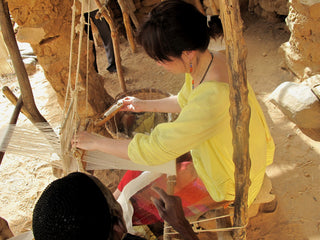
Traveling to numerous locations to demonstrate weaving as a public art, she discovered that it was a therapy for finding joy in living. With a grant from the Peace Stone Foundation, she led a teacher training program in Senegal, and participated in various artist-in-residence programs. In 2015, Yukako co-founded the non-profit Intertwine Arts, creating opportunities for disabled and chronically ill communities to foster creativity and develop artistic independence through weaving.
PAST EVENTS